Inside the woodshop
It looks weathered
because it is.
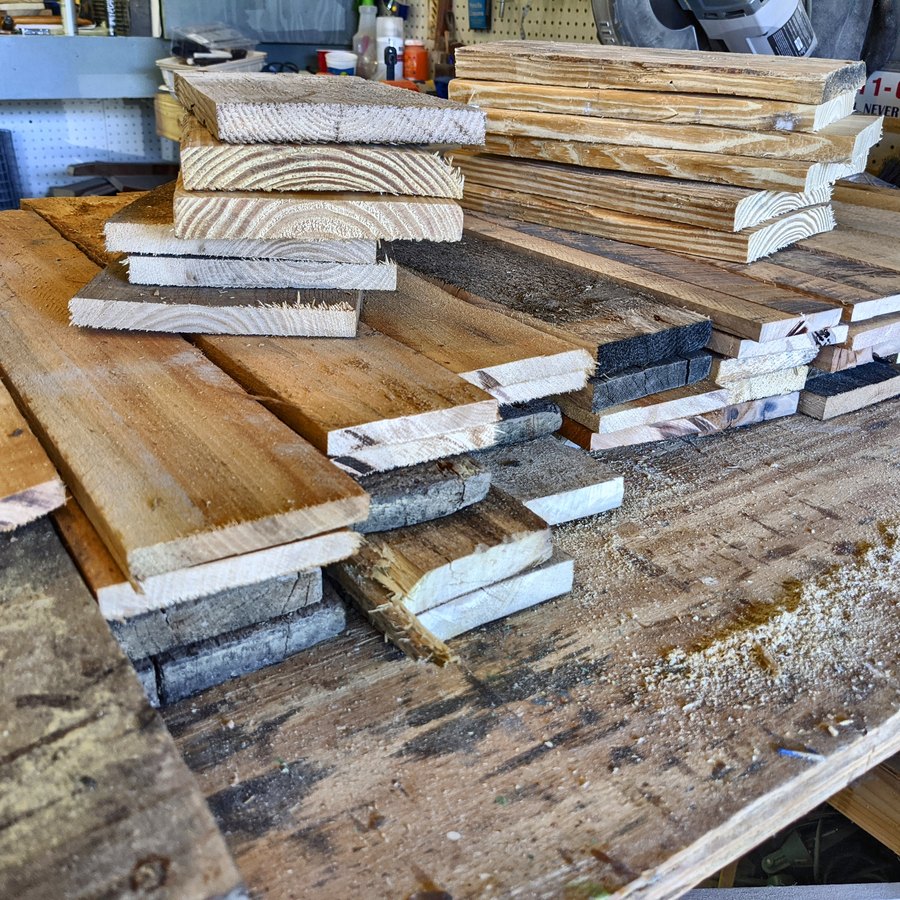
I could buy new lumber. It would be faster and a lot less work. But new wood looks new, and you can always tell.

The distressed signs in home stores have sanded-on scratches and printed-on age. Somebody designed that wear. A machine applied it, identically, ten thousand times.
Mine doesn’t need any of that. Every board I use already spent years outdoors before it ever reached my shop — on a loading dock, in a yard, out in the weather. The grey in the grain is real. So are the knots, the nail holes, and the splits where the boards decided to go their own way.
That’s the part I can’t manufacture, and it’s the reason these look right next to a pool instead of looking like something from a craft store.
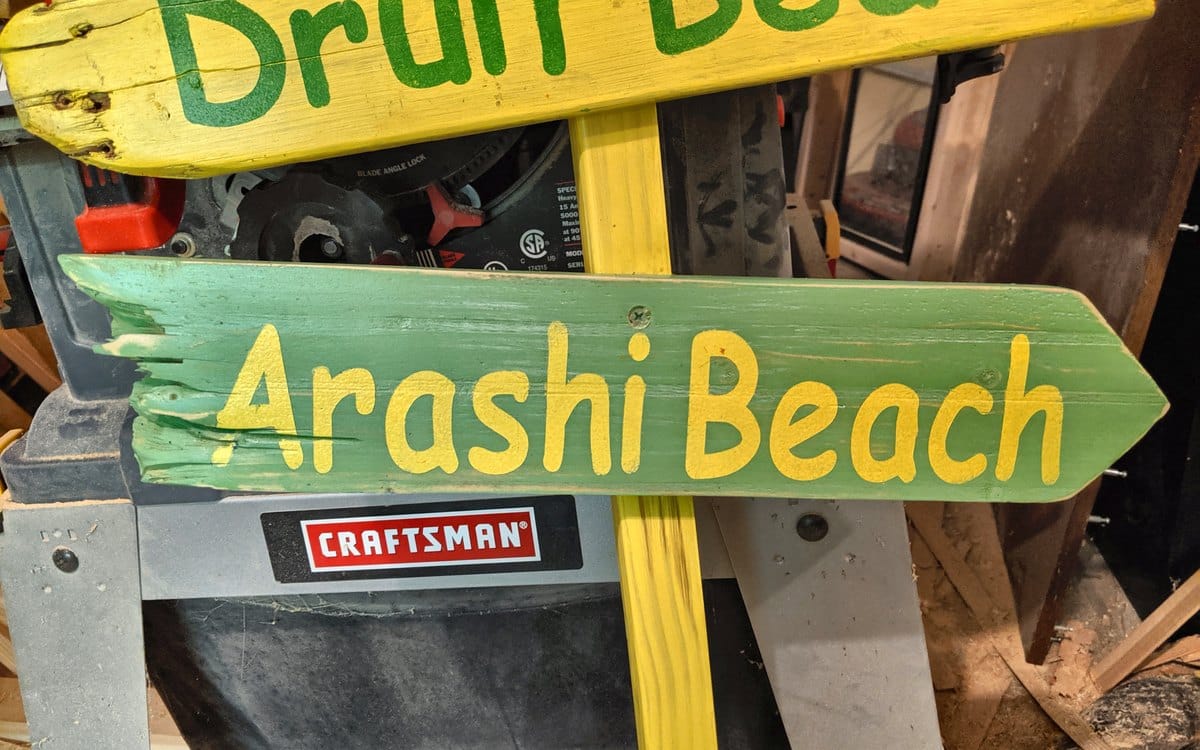
Watch one get made
Two and a half minutes, from a board nobody wanted to a finished sign. No edits that skip the boring parts.
Video hosted on Facebook. If it doesn’t load, watch it here.
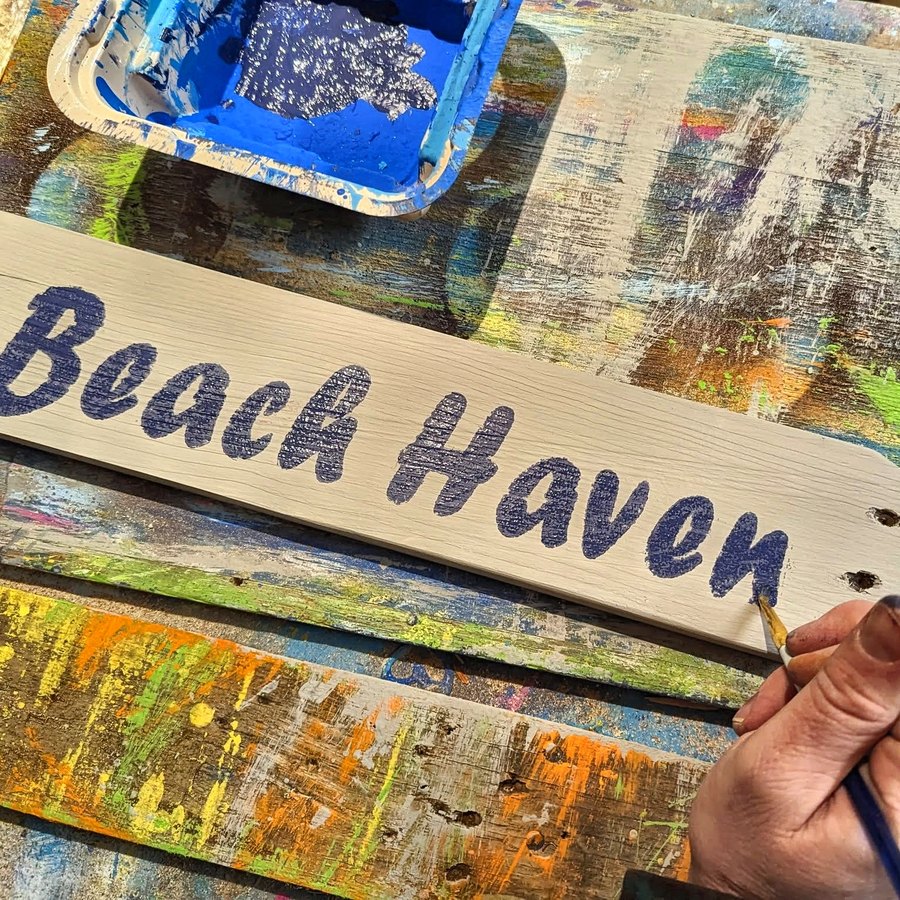
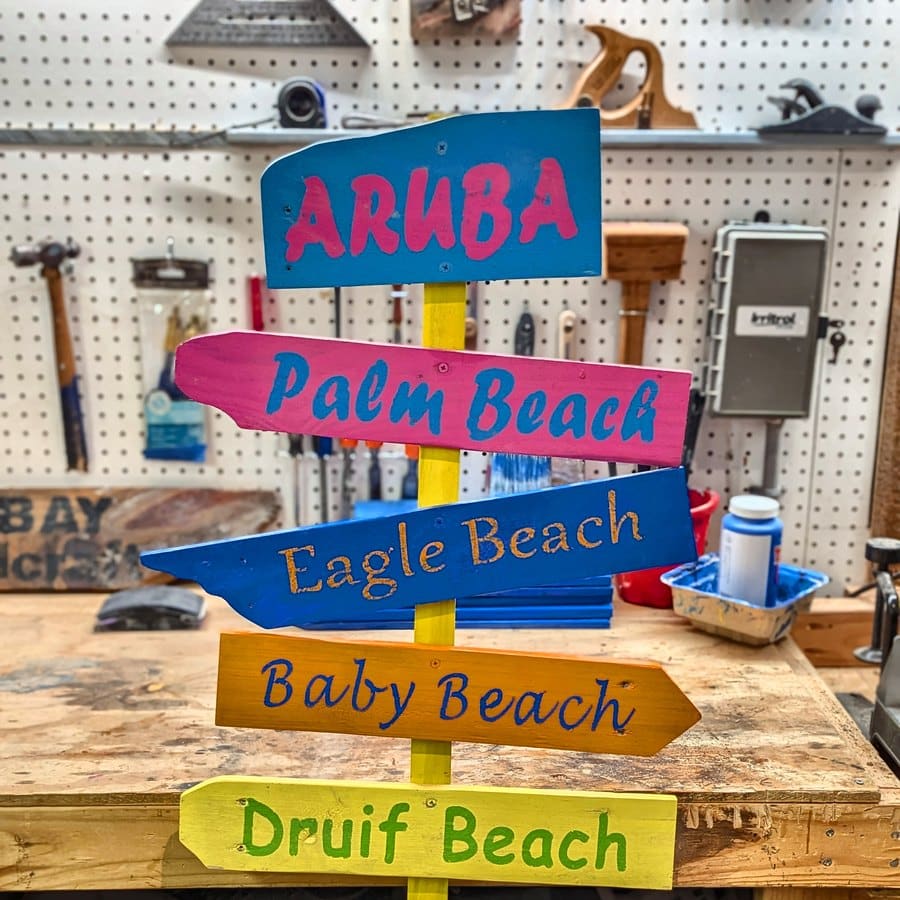
From a discarded board to your yard


How long it lasts
These are built for outdoors and sealed for it. But I’d rather tell you the truth than oversell: full sun will soften the colors over a few years. UV does that to painted wood, and no sealant stops it completely.
Somewhere with afternoon shade keeps them brightest longest. Plenty of people leave them out year-round and love the way they age. Others bring them in over the winter. Both are fine.
If yours ever gets tired, message me — I can usually help.
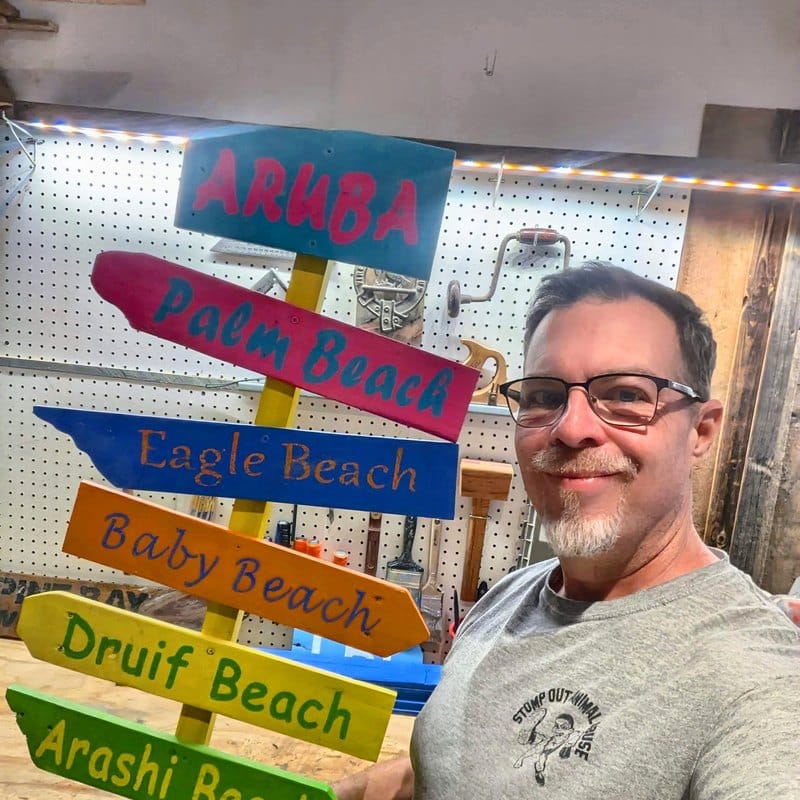
Who makes these
Hi, I’m Tim. There’s no staff and no factory — it’s me, a home woodshop in New Jersey, and a pile of wood other people threw away. I’ve been doing it since 2019.
It’s messy, it’s rewarding, and it’s the part of this business I love most.
Ready to pick your places?
Aruba, Long Beach Island, Cape Cod, or somewhere only you would think of.
Start with Aruba